How to Teach The Very Hungry Caterpillar in Spanish: Free Game (K-2)
Want 5 free no-prep Spanish activities? Click here
If you are looking for a way to teach The Very Hungry Caterpillar in Spanish, this is the game I use to review the foods from the story, and it is free. It is one of my Very Hungry Caterpillar Spanish activities, a Yo tengo, ¿quién tiene? game: 16 picture cards, and each card says what a student has and asks who has the next food.
The whole game is below: my instructions and the 16 cards, 4 to a page. Print them, laminate them, cut them out, and you are ready to play with your K-2 or dual language class.
Yo tengo, ¿quién tiene? in Spanish: how the game works
Yo tengo means “I have” and ¿Quién tiene? means “Who has?” Every card has both: at the top, yo tengo and the food on the card, with its picture; at the bottom, ¿quién tiene? and the food on someone else's card.
Students pass the question around the circle. A student reads their card aloud, and the student who has the food that was asked about reads theirs next. The cards are made to be used with a unit on The Very Hungry Caterpillar in the elementary Spanish classroom, as a review of the foods in the story.
The Very Hungry Caterpillar Yo Tengo game at a glance
- Grade: K-2 and dual language
- You need: the 16 cards, 4 to a page, printed, laminated and cut out
- Students will be able to: read a card aloud in Spanish, say what they have with yo tengo, and listen for the food that someone asks about with ¿quién tiene?
Spanish food vocabulary: the 16 foods on the cards
Every card shows a picture with its Spanish words. Here are all 16, as they are written on the cards.
- Fruit, counting from one to five: una manzana, dos peras, tres ciruelas, cuatro fresas, cinco naranjas
- Treats: helado, un bizcocho de chocolate, una paleta, un pastel de cerezas, un pastelito
- Cheese, meat and a pickle: queso suizo, salame, pepinillo, una salchicha
- And two more: sandía, hoja verde
Before you play
Print the cards, laminate them and cut them out before class. I use them in the second lesson on the foods found in the story, as a review activity.
- Print the 4 pages of cards: 4 cards to a page, 16 in all.
- Laminate the pages, then cut the cards apart.
The cards: yo tengo on top, ¿quién tiene? at the bottom
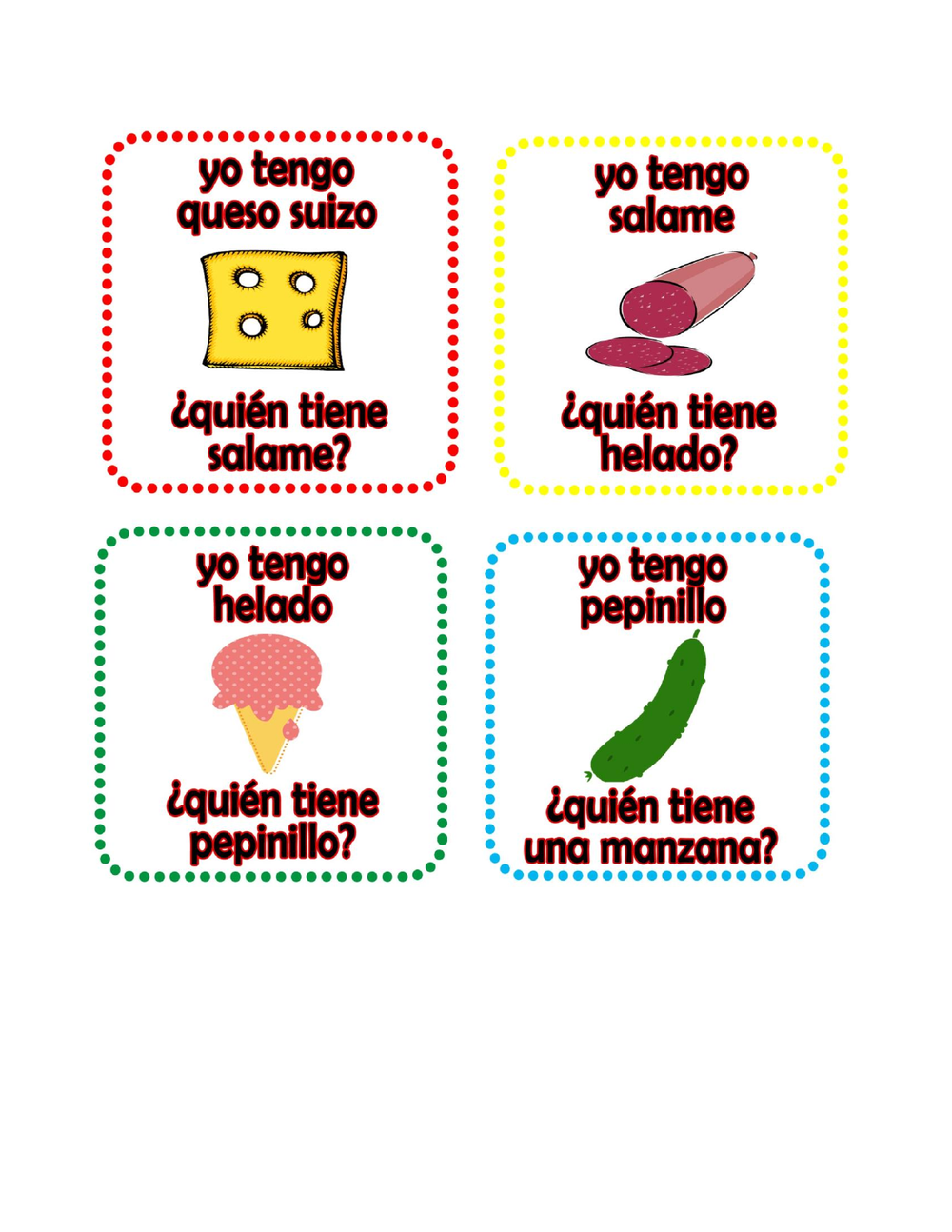
Each card has a colored dotted border and two lines of Spanish. The top line says yo tengo and names the food in the picture. The bottom line asks ¿quién tiene? and names a different food. That is how the game moves from one student to the next.
How to play the Very Hungry Caterpillar game in Spanish
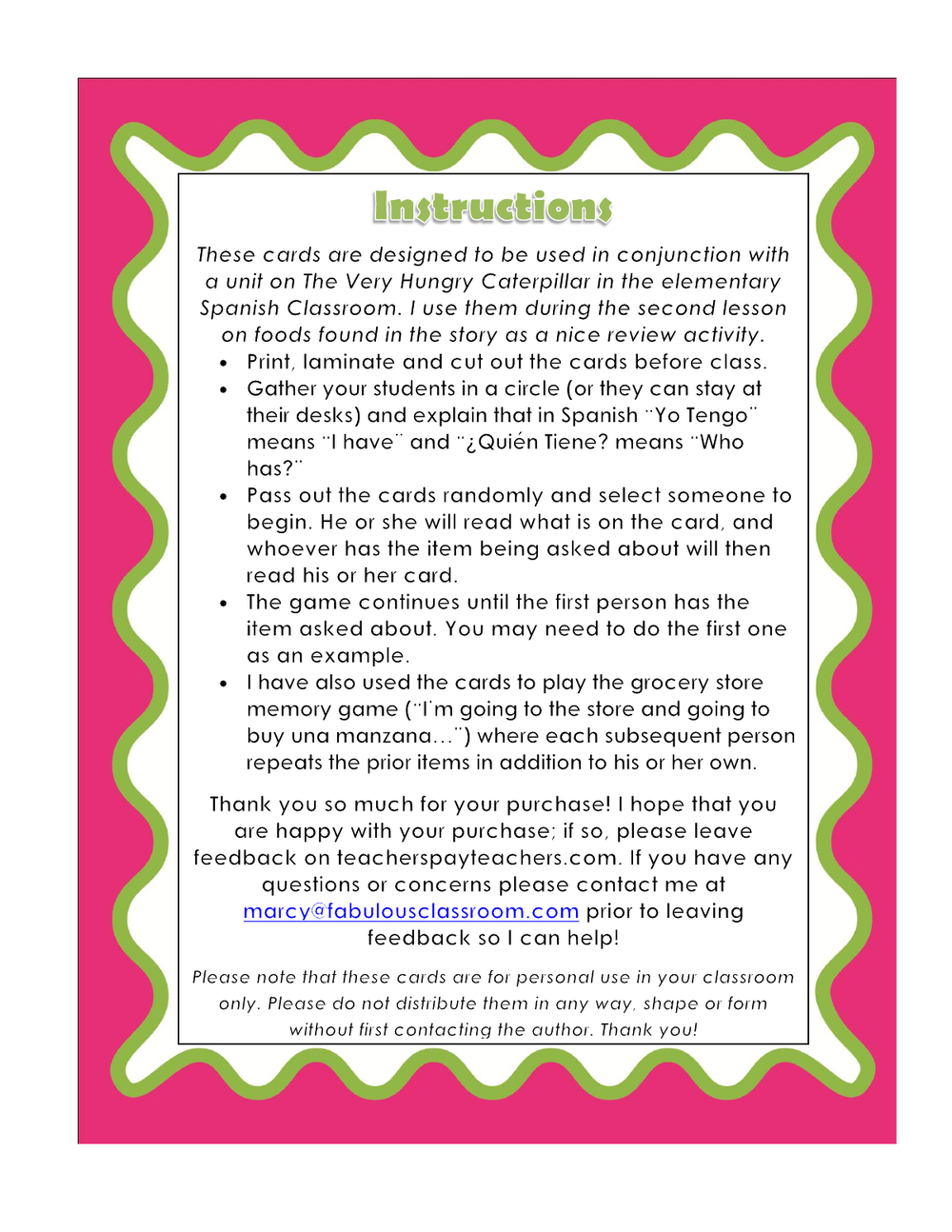
These are the steps from the instructions page of the game, which is the first page of the free file.
- Gather your students in a circle, or they can stay at their desks.
- Explain that in Spanish yo tengo means “I have” and ¿quién tiene? means “Who has?”
- Pass out the cards randomly.
- Select someone to begin. They read what is on their card.
- Whoever has the food that was asked about reads their own card next.
- The game continues until the first person has the food that was asked about. You may need to do the first one as an example.
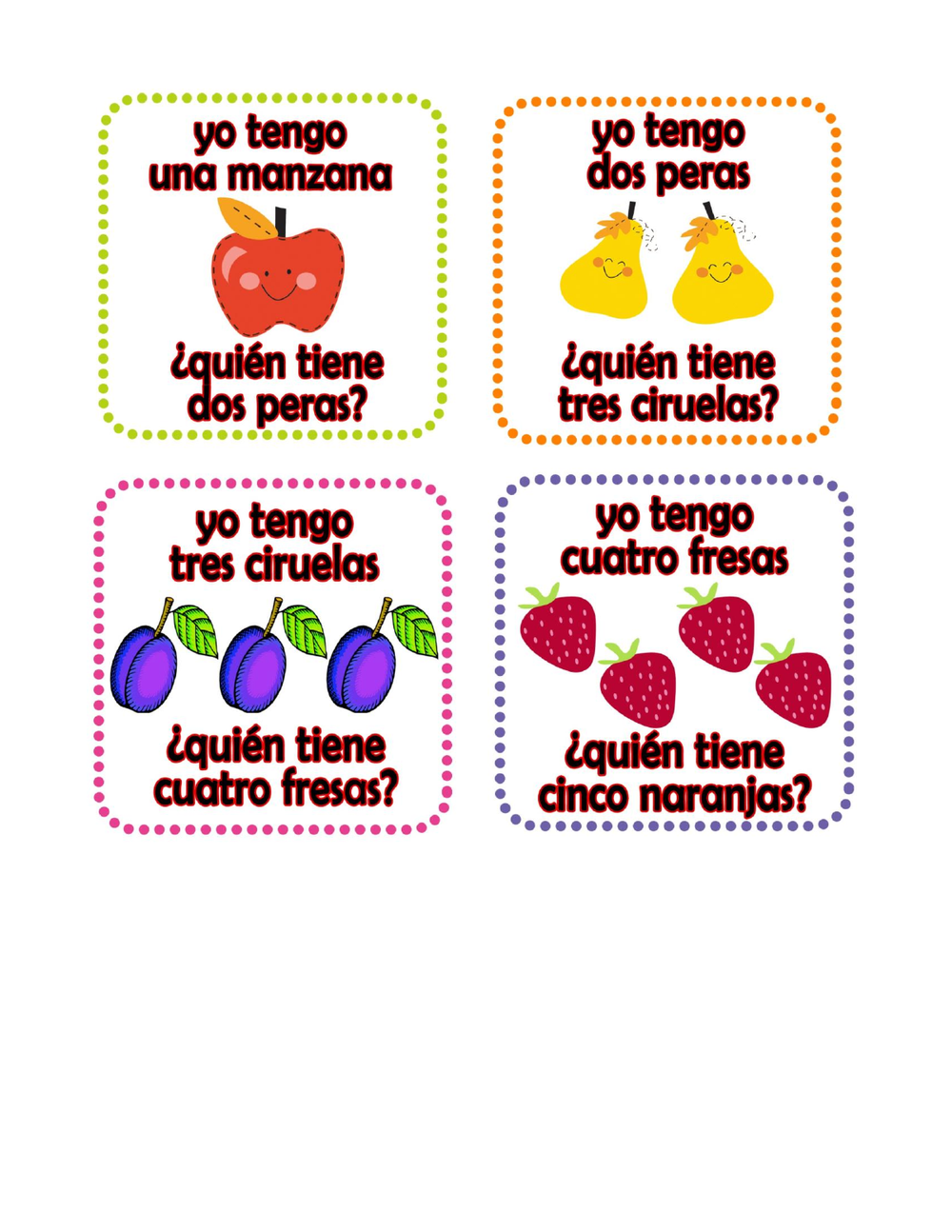
Counting from one to five with the fruit cards
Five of the cards also count: una manzana, dos peras, tres ciruelas, cuatro fresas and cinco naranjas. When students read these cards aloud, they say the number and the fruit together. Four of them are on this page, and cinco naranjas is the first card on the next one.
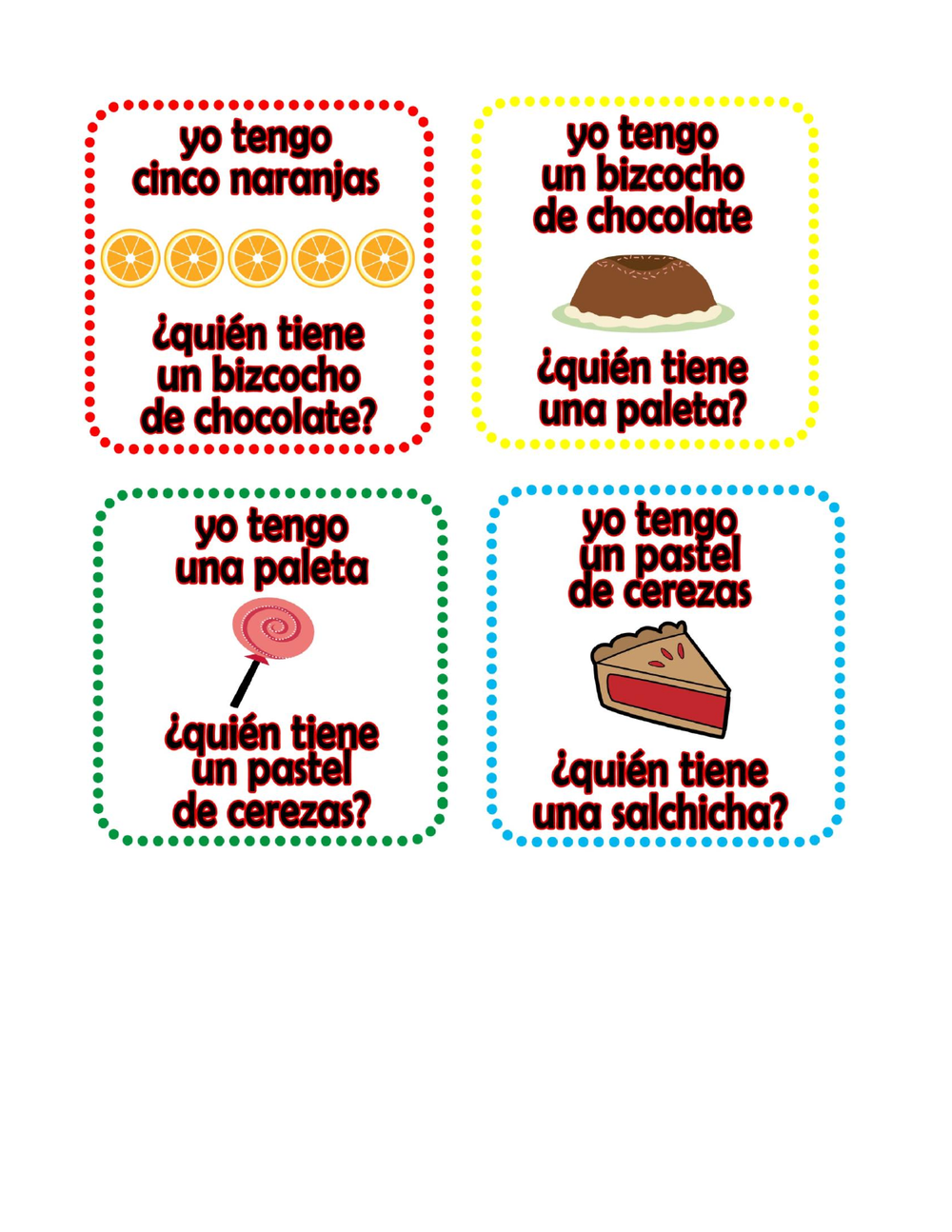
The treats: cake, lollipop and cherry pie
The next cards move from fruit to treats: un bizcocho de chocolate, una paleta and un pastel de cerezas. The chain keeps going, one card asking for the next.
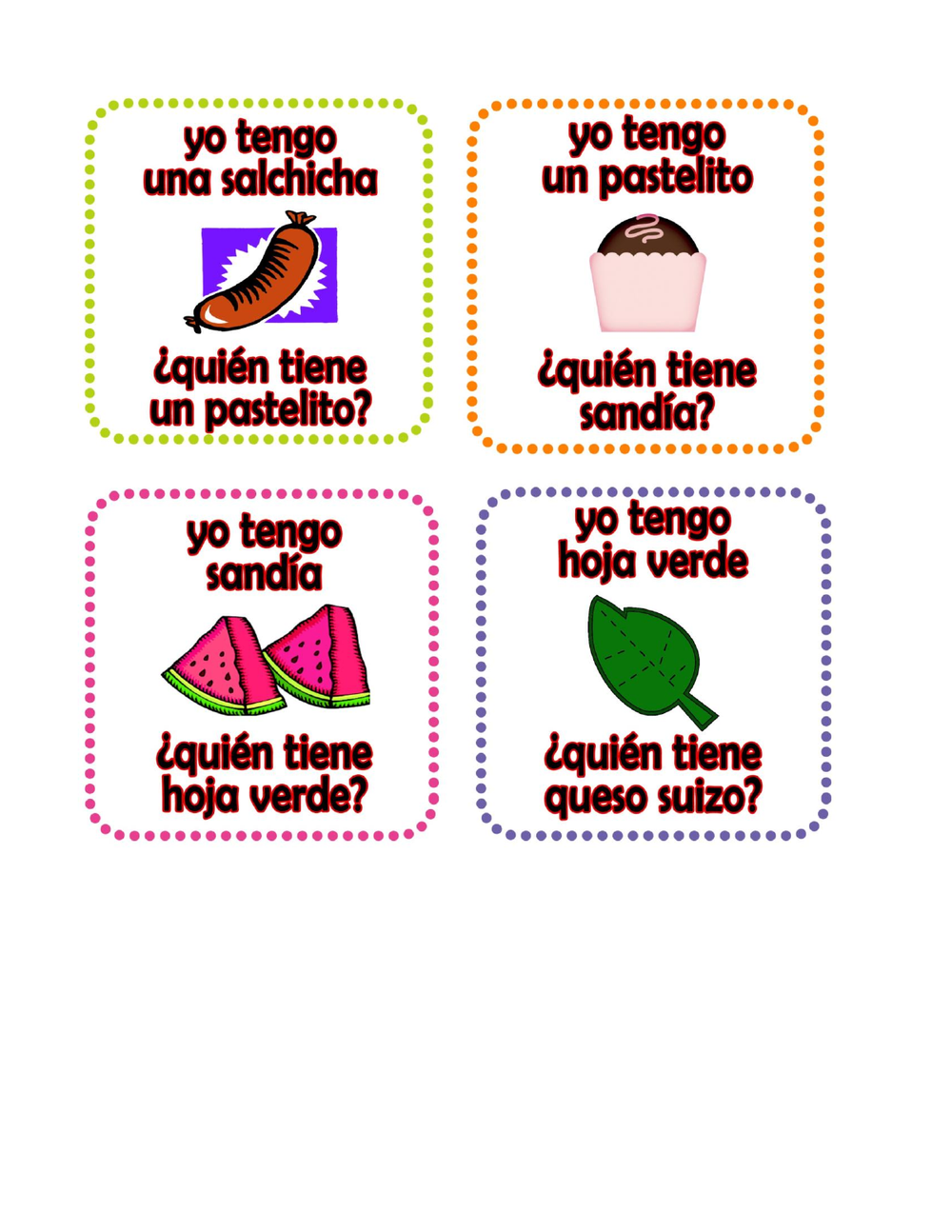
The last cards close the circle
The last card in the file, hoja verde, asks ¿quién tiene queso suizo? That is the food on the first card, so the 16 cards make one circle, and the game comes back to the student who started. This is why the game ends when the first person has the food that was asked about.
Another way to play: the grocery store memory game
I have also used the cards to play the grocery store memory game. Students say “I'm going to the store and going to buy una manzana...” and each student after them repeats the earlier foods in addition to their own.
Here is the free game for The Very Hungry Caterpillar in Spanish
Click the file. It opens on the downloads page. No email needed.
This game is from our Culture & Reading lessons
- Brown Bear, Brown Bear: Bilingual Spanish/English Flashcards
- The Very Hungry Caterpillar: Spanish Flashcards (La Oruga Muy Hambrienta)
- The Very Hungry Caterpillar: Yo Tengo, ¿Quién Tiene? Game
See everything in the membership
Questions teachers ask about The Very Hungry Caterpillar in Spanish
How do you play yo tengo quién tiene in Spanish?
Gather students in a circle (or at their desks) and pass out the cards randomly. Pick someone to start: they read their card, and whoever has the food that was asked about reads next. The game goes on until the first person has the food that was asked about. You may need to do the first one as an example.
What do yo tengo and quién tiene mean?
Yo tengo means “I have” and ¿quién tiene? means “Who has?” Explain both to students before you start, because every card uses both phrases.
What Spanish food words are in the game?
There are 16: una manzana, dos peras, tres ciruelas, cuatro fresas, cinco naranjas, helado, un bizcocho de chocolate, una paleta, un pastel de cerezas, un pastelito, queso suizo, salame, pepinillo, una salchicha, sandía and hoja verde. The list is above.
How do you use this game with The Very Hungry Caterpillar?
I use the cards during the second lesson on the foods found in the story, as a review activity. You can also use them for the grocery store memory game, where each student repeats the earlier foods in addition to their own.
Pin this for later
Want every Spanish resource, ready to teach?
The membership has 100+ no-prep resources in six topic courses, and I add new ones as I finish them. $149 a year, or $49 every three months. Cancel anytime.
Get 5 free no-prep Spanish activities
Ready to print and use tomorrow. I send them straight to your inbox. No credit card.
Your email is safe with me. Unsubscribe anytime.